山、雾、房子
MOUNTAINFOG,BUILDING
重庆多雾,南山更甚,其景观常年在视觉上处于不断的消解而重构之中,魔幻而令人沉迷。原址建筑位于南山山腰,是一个由三个不同时期的建造体量拼贴而成的“怪房子”,其内部体验亦是曲折幽闭,峰回路转。在此地,山,雾,房子三者共筑了某种含混而不可言说的场所精神,颇有一种“塔可夫斯基”式的电影体验。这一切都预示着常规改造手法已无法回应区域要素提供给人的所有感官知觉。
▼雾天南山,thesouthernmountaininfog©止建筑
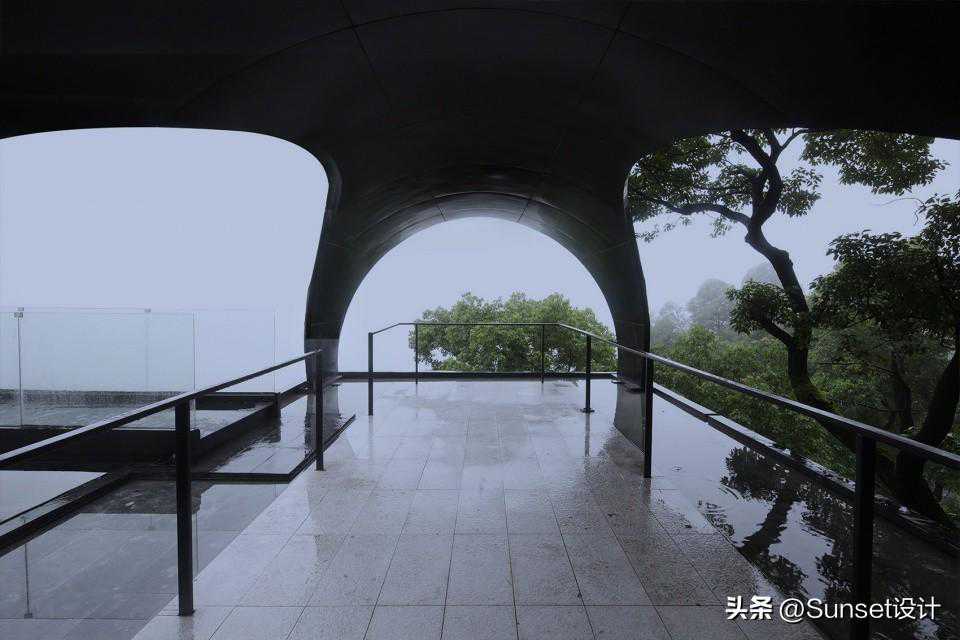
Chongqingisfoggy,allyearround,“weirdhouse”,,mountains,fog,andhousescreateavagueandunspeakablespiritofplace,akindof“Tarkovsky”letorespondtoallthesensoryperceptionsprovidedbyregionalelements.
▼原建筑外观,originalstateofthebuilding©止建筑
▼塔科夫斯基电影截图,screenshotofTarkowskifilm©网络图源

桥
BRIDGE
▼鸟瞰航拍图,aerialviewoftheprojectandsurroundingenvironment©止建筑
▼正立面航拍图,aerialviewofthefrontfacade©止建筑
我们选择在雾中架起一座没有尽端的桥梁。“桥”是一个意味明确的构筑:在空间上,其指向一种架接性的通过行为;叙事上,则往往与“互视”“相遇”等“事件”相联系。其稳定而明确的符号性,与飘忽的景观在场共筑了某种奇妙的幻境式体验。
▼加建部分图解,analysisoftherenovationpart©止建筑
Wechosetobuildanlessbridgeinthefog.“Bridge”isaconstructionwithaclearmeaning:inspace,itpointstoabridge-likepassingbehavior;innarrative,itisoftenconnectedwith“events”suchas“mutualviewing”and“encounter”.Itsstableandclearsymbolicnature,togetherwiththepresenceoftheerraticlandscape,createsawonderfulfantasyexperience.
▼雾天桥景,thebridgeinfog©止建筑
▼雾天的桥,thelessbridgeinthefog©止建筑
▼雾天的平台,theplatforminfog©止建筑
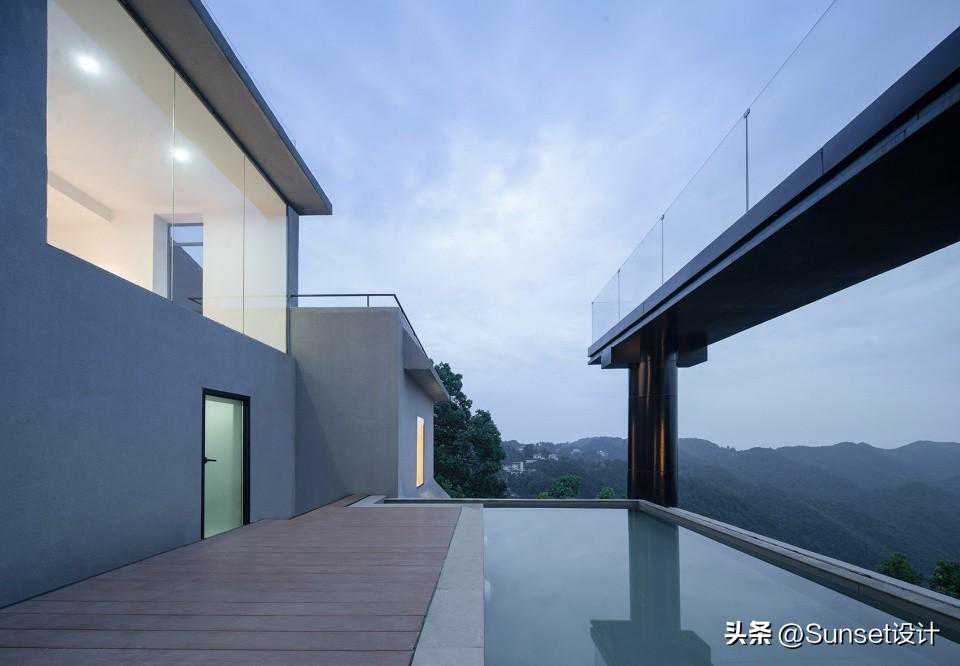
桥的平台顶棚采用了四面拱的几何原型,亦旨在强化其作为“物”的稳定性。其与桥,柱子,和首层加建圆柱体,形成了一个自恰的几何体系,以一个轻量化的姿态并置于原建筑的形体之上,主导了建筑整体的形式表情。
Theplatformroofofthebridgeadoptsthegeometricprototypeofthefour-sidedarch,,pillars,,anddominatestheoveralloutlookofthebuilding.
▼屋顶平台与桥,theroofterraceandbridge©此间建筑摄影
▼从四楼平台看桥,viewingthebridgefromthefourthfloorplatform©此间建筑摄影
▼屋顶平台与拱顶,theroofterraceandvault©此间建筑摄影
桥最终也作为某种“标识”对原先孤立的露台空间进行了叙事性的连接:三楼北部露台初见,桥与桥上之人构成了一个戏剧性的前景;四楼东侧露台上桥,拱形画框和雾中弥散的桥梁达成了某种宗教式的崇高感;四楼西侧露台守望,平台与桥端之人相视而无法相遇。
Thebridgefinallyactsasakindof“sign”toconnecttheoriginallyisolatedterracespaceinanarrativeway:Atfirstsightonthenorthernterraceofthethirdfloor,thebridgeandthepeopleonthebridgeformadramaticforeground;Ontheeastterraceofthefourthfloor,thearchedpictureframeandthebridgediffusedinthefogachieveacertainsenseofreligioussublime;Onthewestsideofthefourthfloor,thepeopleontheplatformandthepeopleattheofthebridgecanseeeachotheryetcannotmeet.
▼从三楼平台看,viewingthebridgefromthethirdfloorplatform©此间建筑摄影
▼三楼平台,thethirdfloorplatform©此间建筑摄影
▼从一楼入口看桥,
viewingthebridgefromthegroundfloorentrance©此间建筑摄影
记忆
MEMORY
▼原建筑图解示意,analysisdiagramoftheoriginalpartofthehouse©止建筑
原建筑内部空间秩序始于一种自下而上的野蛮生长,其在有限的的尺度内呈现了某种混沌而戏剧性的叙事感:首层不到200平方的面积里,并置着3个不同位置与形制的楼梯;内部充斥着各种始料未及的高差与不知通往何处的门洞;水洗石与饰面砖等室外材料会突然出现在室内,模糊了边界的感知。原建筑也由此成为某种记忆的载体,有着独立自洽的叙述结构。
Theinternalspatialorderoftheoriginalbuildingbeginswithasavagegrowthfromthebottomup,whichpresentsachaoticanddramaticnarrativewithinalimitedscale:thefirstfloorislessthan200squaremeters,andtherearethreestairswithdifferentpositionsandshapes;theinteriorisfullofunexpectedheightdifferencesanddooropeningsthatleadtonowhere;outdoormaterialssuchaswashedstoneandveneerbrickssuddenlyappearindoors,,withanindepentandself-consistentnarrativestructure.
▼原建筑细节,originalstateofinterior©止建筑
剪辑
EDITING
我们将建筑内部的整体性改造定义为“剪辑”,基于原有建筑的叙事结构与记忆节点,进行“梳理”“整合”与“调度”。
Wedefinetheoverallrenovationofinterioras“editing”,andbasedonthenarrativestructureandmemorynodesoftheoriginalbuilding,wecarryoutmethodssuchas“combing”,“integration”and“scheduling”.
▼一楼改造前后平面对比,groundfloorplanbeforeandafterrenovation©止建筑
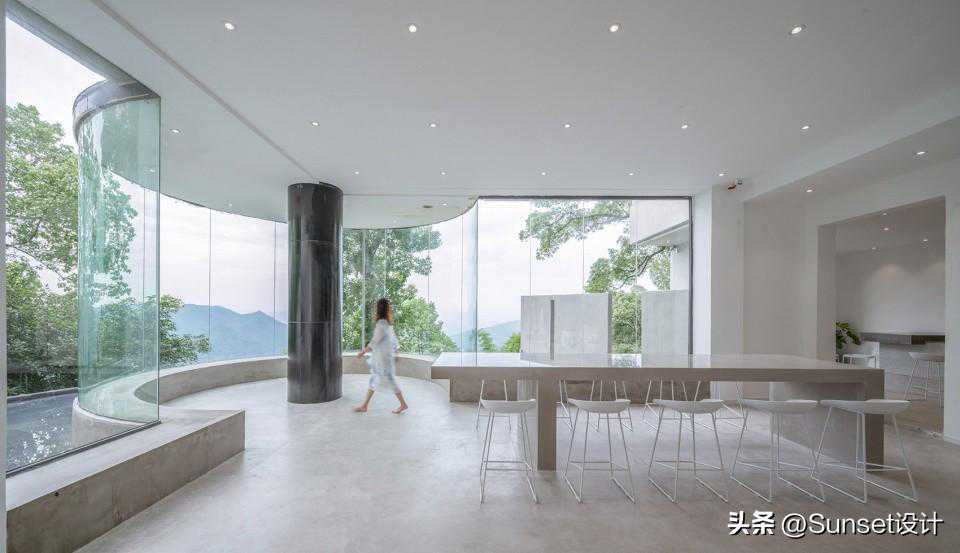
首层的开放院落被室内化并辅以水景反射远山,顾客在入口处需先进入西侧较为封闭的接待室,转折之后会直面扑面而来的山景;原建筑边缘围绕角柱做了一个圆形的空间的放大,将方形角柱变为一个向心性的中心柱,隐晦的暗示了其所支撑的作为体验高潮的顶楼构筑:原位于首层主入口的主门洞被封上,将住客往东面引导,西侧旋转楼梯则被按原状保留下来同时作为上二楼的快速通道。
Theopencourtyardonthefirstfloorisindoo,customersneedtoentertherelativelyclosedreceptionroom,centripetalcentralcolumn,whichimplicitlyhintsatthetop-floorstructure:themaindoorwayoriginallylocatedatthemainentranceonthefirstfloorissealed,allowingtheresidentstoLeadingtotheeast,thespiralstaircaseonthewestsideiskeptasitisandservesasafastpassagetothesecondfloor.
▼一楼大厅看向室外,viewingexteriorfromthegroundfloorlobby©此间建筑摄影
▼一楼画室看向室外,viewingexteriorfromthegroundfloorgallery©此间建筑摄影
▼一楼画室看向大厅,viewingthelobbyfromgallery©此间建筑摄影
东侧体块较为特殊,上下层8个房间中有6个为黑房间,一部形制特殊的老楼梯占据了区域的中心。为了回避黑房间的使用弊端,我们将“画室”功能置入其中,以一条明确的观展动线强化了原建筑中灵活的游走体验。“展厅”由人造光源所营造出的稳定和人工感与“遗址”(老楼梯)所呈现的粗野与原始亦形成了某种对仗。
Theeastsideblockisspecial,6ofthe8roomsareblack,,weputthe“gallery”functioninit,andemphasizedtheflexiblewalki“gallery”andtheroughnessandprimitivenesspresentedbythe“relics”(oldstairs)alsoformacertaincounterpoint
▼一楼画室,groundfloorgallery©此间建筑摄影
▼一楼画室看原址楼梯,viewingtheoriginalstaircasefromthegallery©此间建筑摄影
▼原建筑楼梯区域,theoriginalstaircase©此间建筑摄影
推手
PUSHHANDS
在单一空间改造操作上,我们借用了“推手”的概念,希望在把握空间原有形制结构的基础上,顺势而为。具体而言,我们总结了3种手法类型:留白,原址保留空间内重要的构建节点或强化突出窗外景观,其他部分以刷白整平为主;增补,基于原有空间的高差和洞口,做适量加减以适应人的行为尺度;置换,拆除部分临时性构筑,以更稳定的几何秩序构建提供锚定的空间体验。
▼改造推手图解,analysisdiagram©止建筑
Intherenovationofaindepentspace,weborrowedtheconceptof“pushhands”,hopingtofollowthe,wesummarize3typesoftechniques:leaveblank,retainimportantconstructionnodesintheoriginalspaceorhighlightthelandscapeoutsidethewindow,leavingotherpartswhitewashedandflattened;supplementary,basedontheheightdifferenceandopeningoftheoriginalspace,Appropriateadditionsandsubtractionsaremadetoadapttothescaleofhumanbehavior;replacement,replacesometemporarystructureswithamorestablegeometricordertoprovideananchoredspatialexperience.
▼增补改造后的一楼大厅,thegroundfloorlobbyafterrenovation©止建筑
▼二层餐厅与包间洞口,restaurantandprivateboothonthefirstfloor©此间建筑摄影
▼二楼餐厅的洞口,detailsoftherestaurantonthefirstfloor©此间建筑摄影
洞口
HOLE
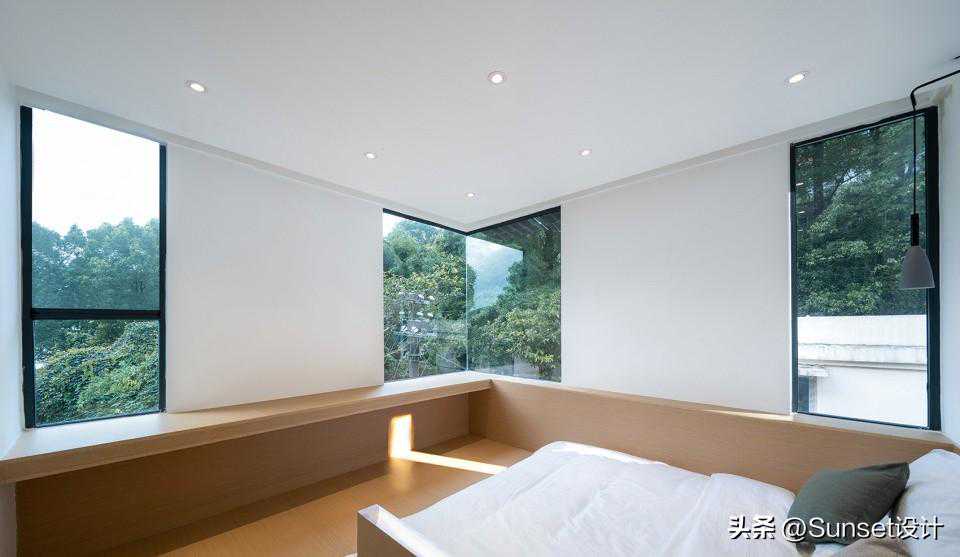
受限于成本控制,所有内部墙体的改造操作仅限于开凿一个80公分的门洞和去掉窗下墙。这使得公区和客房内部充满“洞口”,其作为媒介将流动的小空间串联起来,会在不经意间形成一些暗示性的对望关系。客房设计的核心亦是在处理各类洞口和床铺的对位关系。
▼房间与洞口,guestroomsandopenings©止建筑
▼洞口,openings©止建筑
Restrictedbybudget,allinteriorwallrenovationoperationsarelimitedtodigg“holes”,whichasamediumconnectthesmallflowingspacesinseries,hipbetweenvariousopeningsandbeds’position.
▼置换改造后的客房,guestroomafterrenovation©此间建筑摄影
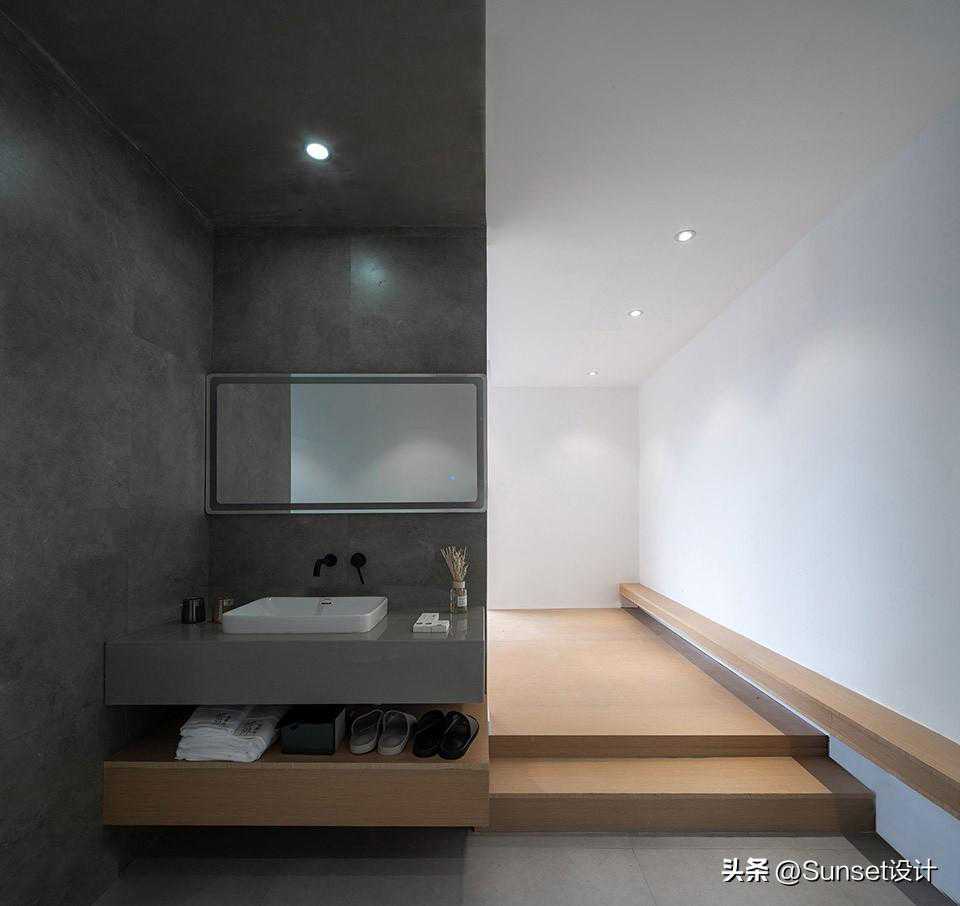
▼材料的对比,contrastbetweenthematerial©此间建筑摄影
▼浴室,bathroom©此间建筑摄影
舞台
STAGE
Aftertheofficialoperationofthebuilding,,theballettroupepressingtheirlegsontheroof,,inasubtleway,madeaconnectionwiththe“I”’tknowhowtheyratedthedesign,butI’msuretheyallgenuinelyadmiredthemselvesonthat“stage”.
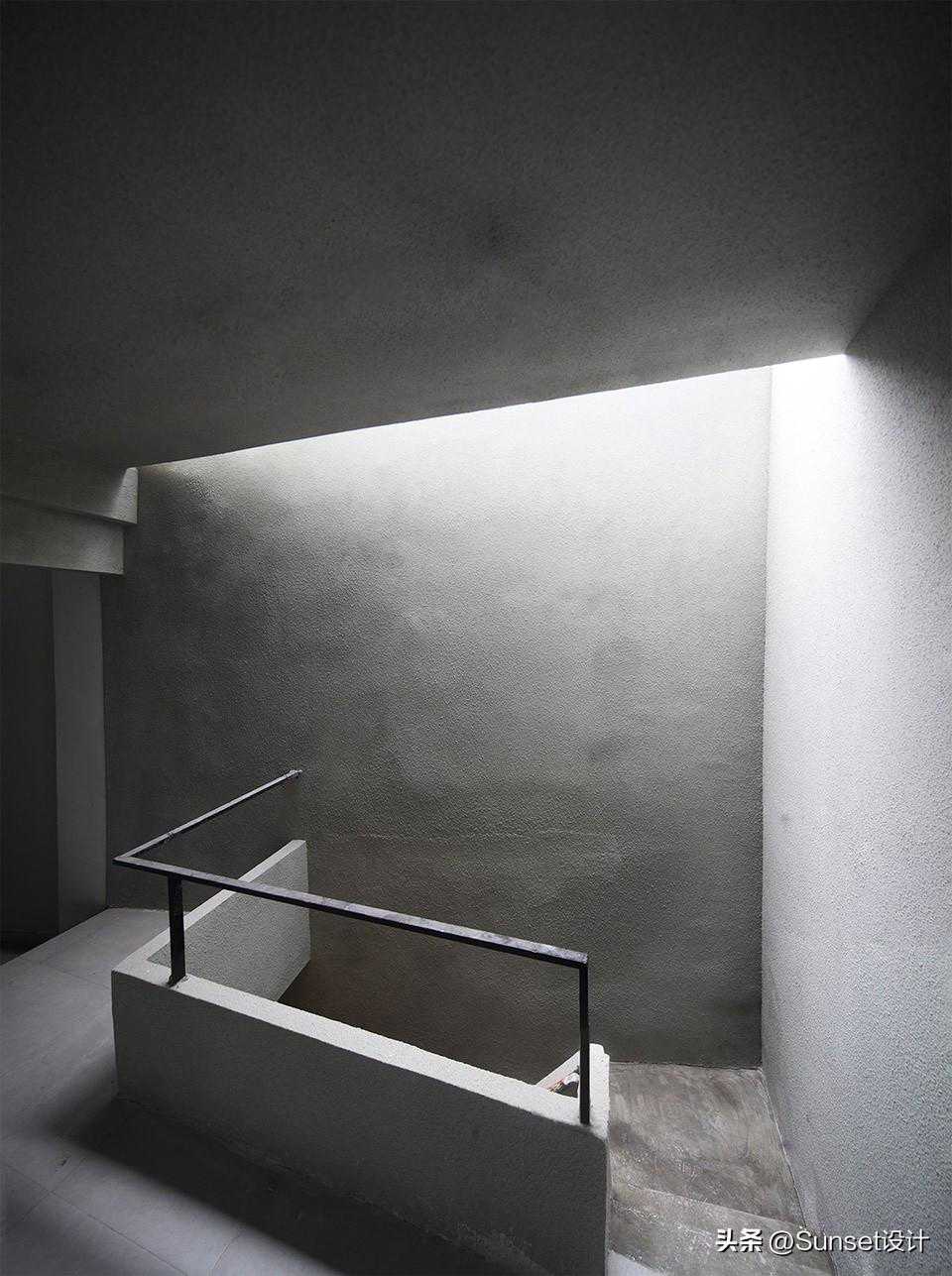
▼楼梯间细部,detailsofthestaircase©此间建筑摄影/止建筑
▼一层平面图,1fplan©止建筑
▼二层平面图,2fplan©止建筑
▼三层平面图,3fplan©止建筑
▼四层平面图,4fplan©止建筑
▼正立面图,frontelevation©止建筑
项目名称:桥舍
项目类型:民宿画室
设计方:武汉止建筑
公司网站:
联系邮箱:c@
项目设计:2019
完成年份:2020
设计团队:余凯贵溥健王志峥钱曼刘晨阳肖磊刘沛桐迟悦寇宗捷黄尤佳臻真小筑
设计咨询顾问:范久江胡兴刘常明
项目地址:重庆南山
建筑面积:910㎡
摄影版权:此间建筑摄影(赵奕龙万勇波)止建筑
客户:城外有星光文旅集团有限公司